Intelligence infrastructure for thermal energy networks.
Get in touchThermal energy networks
Our energy future must be built on efficiency. Thermal energy networks replace aging gas infrastructure with shared geothermal loops and ground source heat pumps, delivering heating and cooling at three to five times the efficiency without fossil fuels. Utilities are building them, but no standardized way to capture operational data, benchmark performance, or prove results to regulators exists yet.
How Jouler works
Jouler is building the data and intelligence infrastructure for thermal energy networks. The same physics model that evaluates a proposed network before construction carries forward as a digital twin, monitoring operations and verifying performance against design expectations.
Concept
In: Owner outlines the project
Out: Rapid feasibility model
Build
In: Real system specs and load profiles
Out: Data architecture and metering spec for the EPC
Run
In: Real operational data
Out: Digital twin monitoring with optimization recommendations
Prove
In: Measured savings and performance results
Out: Regulatory-ready reporting and M&V documentation
Feeds back into the next Concept phase
See it run
The same platform that models a network before construction, now analyzing it in real time.
What we've built
Feasibility modeling and real-time network intelligence, working today.
Concept
Sample feasibility output, 8760-hour simulation.
Run
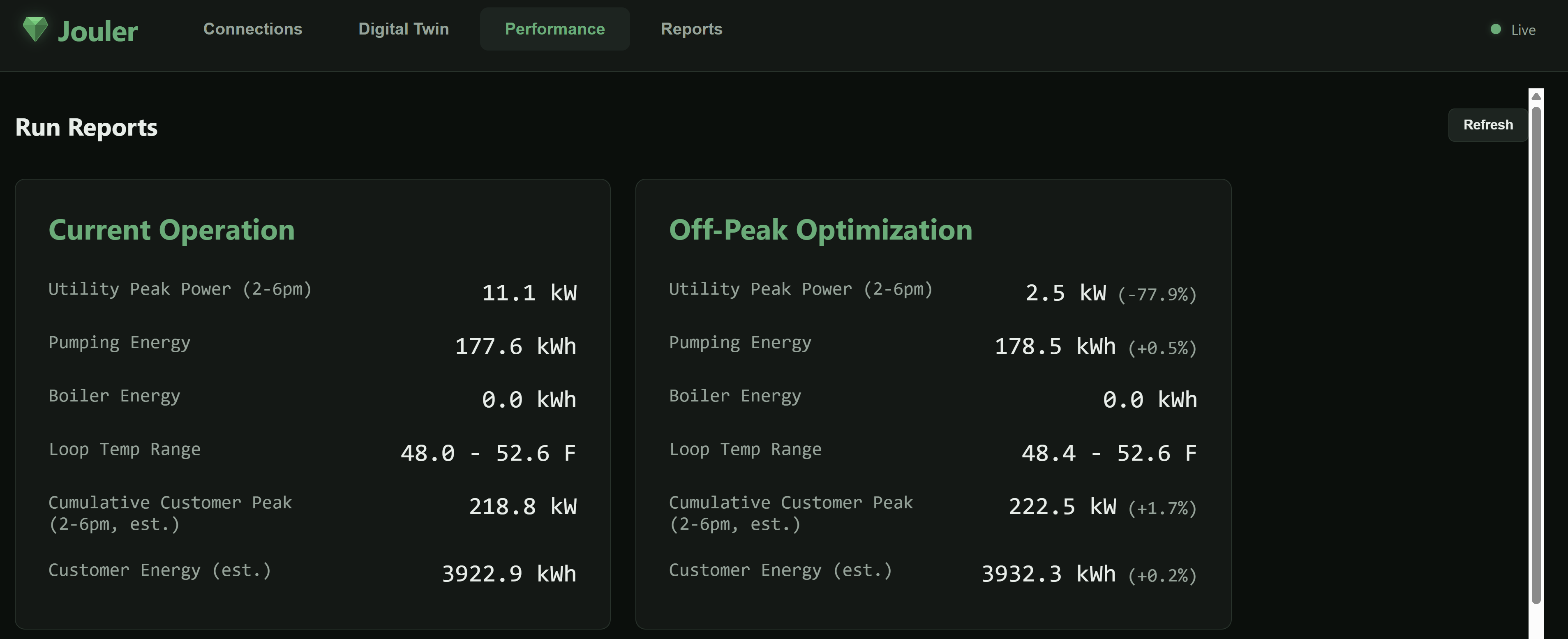
Performance across optimization scenarios on the same 37-building thermal network.

Erich Ryan
Founder
Erich Ryan founded Jouler in 2025. His graduate research at UMass Amherst focused on the techno-economics of district geothermal systems. Before Jouler, he evaluated utility energy efficiency programs for the California Public Utilities Commission and built physics-based digital twins at Greentown Labs.